Frying Pan and Material – Which One is Best?
8th APRIL 2024
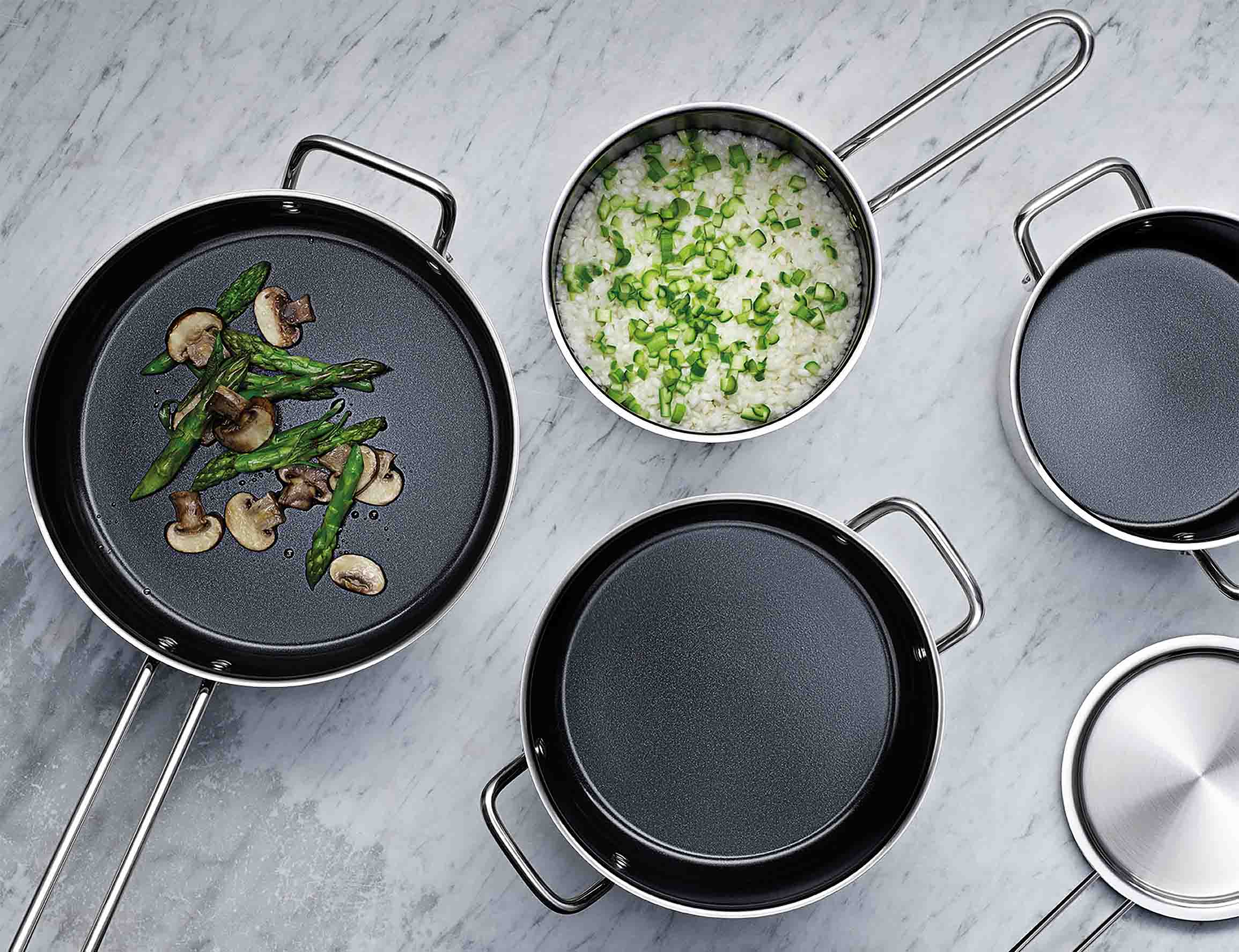
A frying pan is one of the most interactive cooking tools – we constantly move, flip, lift, and set it down again. Therefore, it is essential to consider its ergonomic properties. One of the key factors influencing a pan’s performance is the material from which it is made.
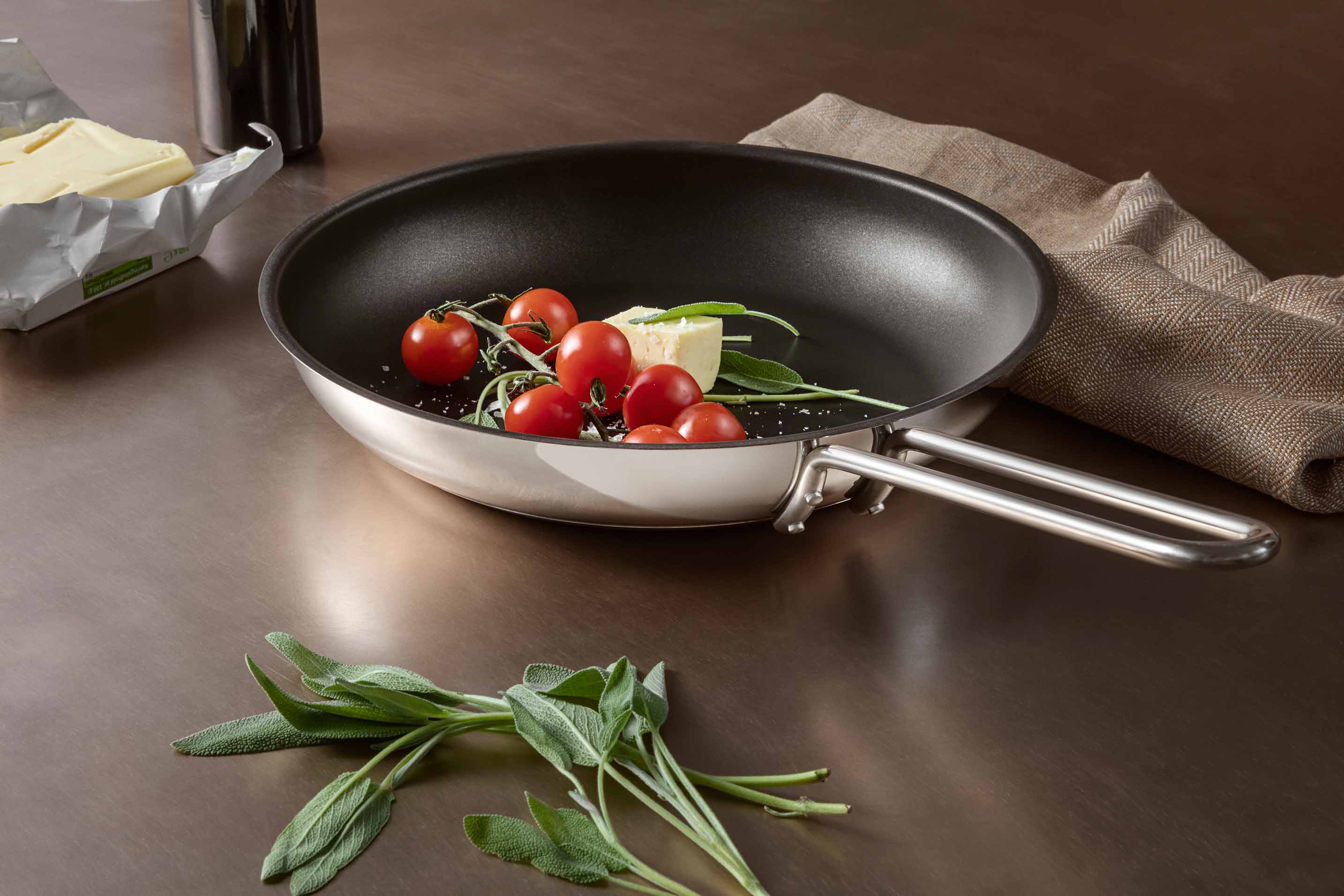
Interestingly, EVA SOLO’s range does not include any pans made from a single material. Depending on the type of pan, a primary structural material is selected, which is then complemented by other components. This is because no single material fully meets all the demands of modern cookware. Instead, a combination of various metals and alloys is used to achieve optimal performance.
The innovator behind this approach was Ole Palsby (1935–2010), one of the developers and designers of the EVA SOLObrand. A self-taught product design enthusiast, Palsby quickly recognized that combining copper, aluminum, and cast iron could yield outstanding results.
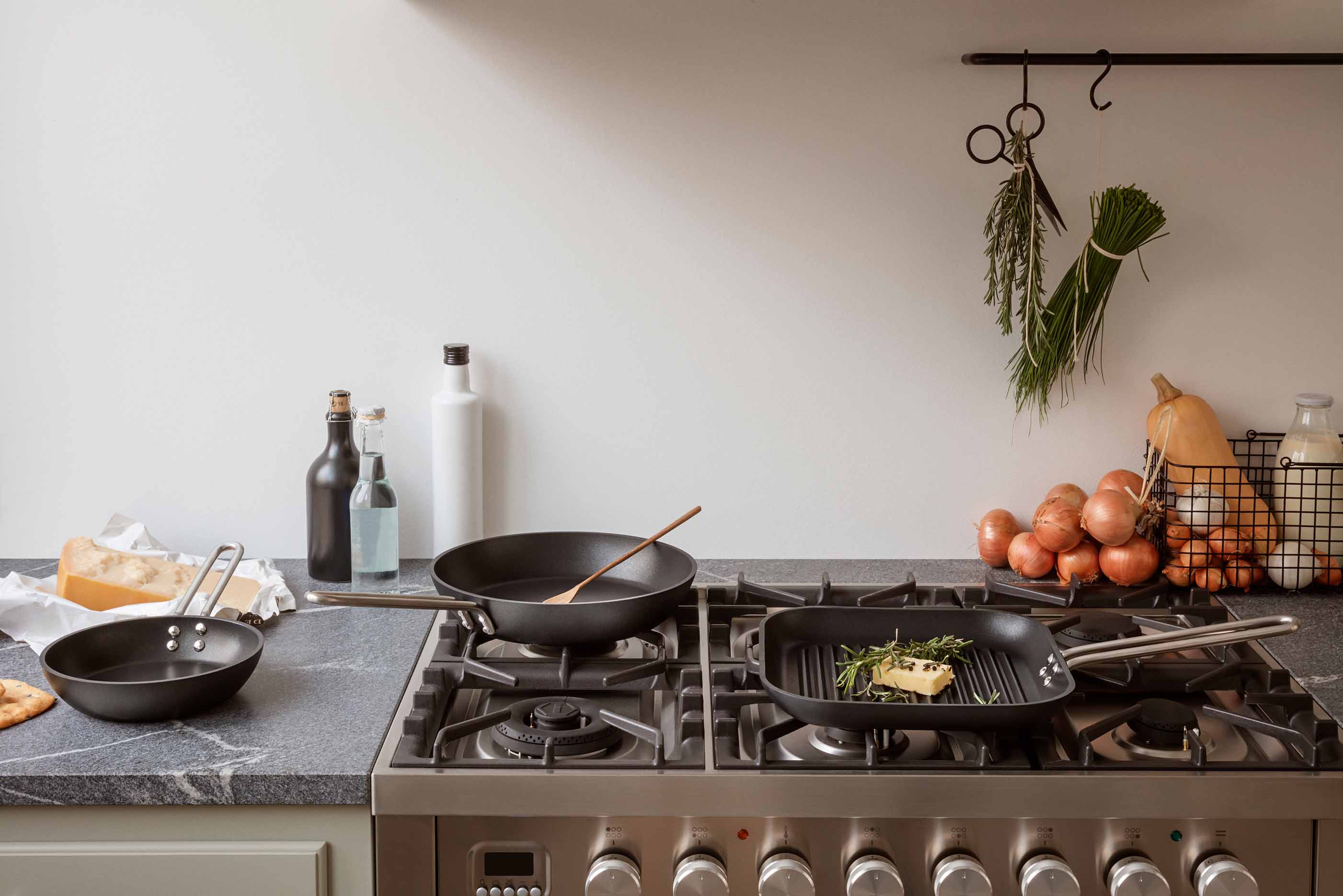
For instance, cast iron (an iron-carbon alloy) retains heat exceptionally well, making it ideal for slow-cooked dishes that require consistent, high temperatures.
In contrast, copper reacts instantly to temperature changes. A copper pan heats up quickly but also cools down just as fast, allowing for precise control over cooking temperatures.
Meanwhile, aluminum is an exceptionally lightweight material, making it ideal for maneuverable, easy-to-use frying pans that are perfect for quick, everyday meals.
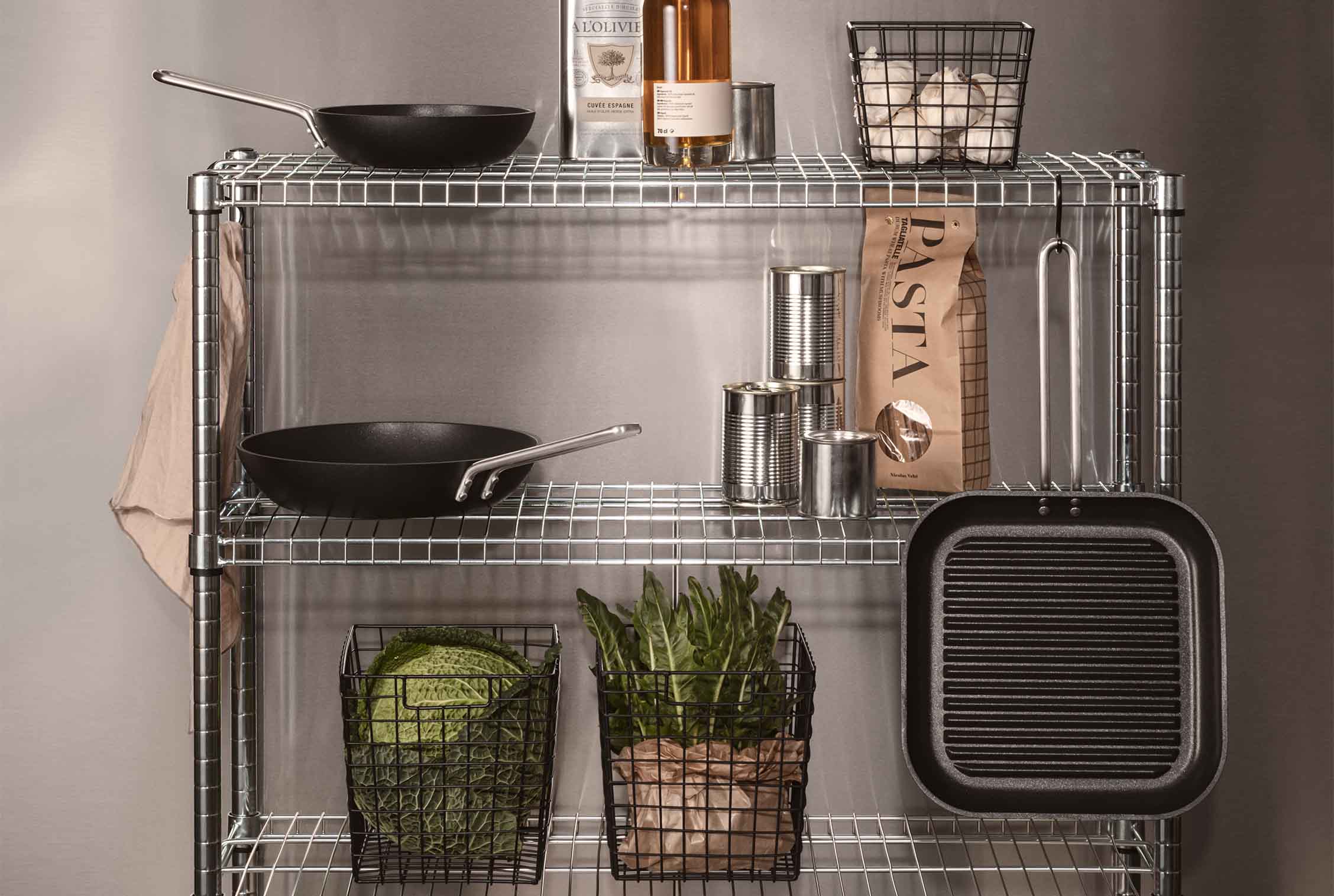
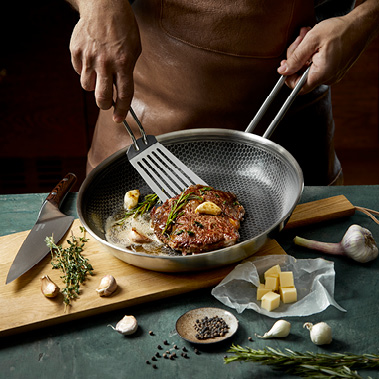
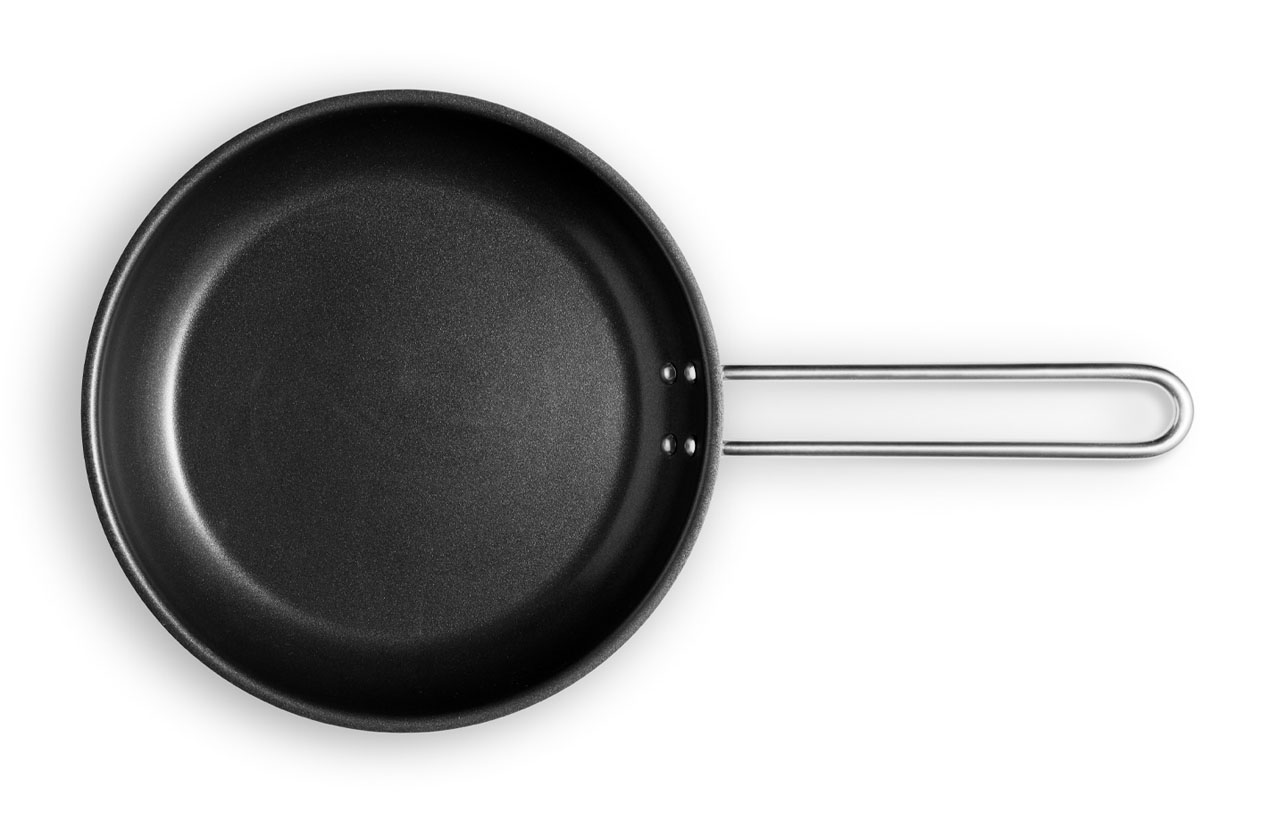
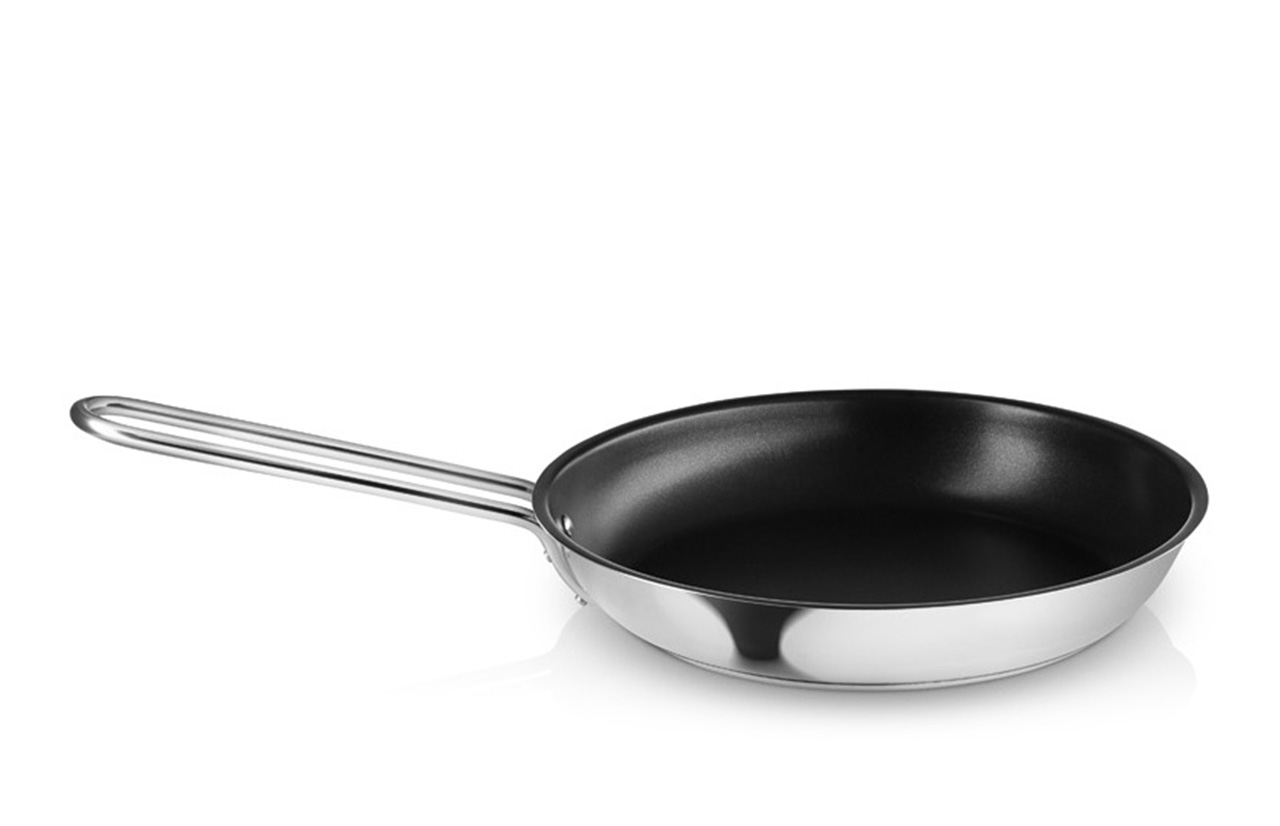
The handle is another crucial aspect of a frying pan’s design. Many EVA SOLO pans feature a distinctive U-shaped stainless steel handle that remains cool to the touch, ensuring complete control during cooking. Additionally, when not in use, the pan can be conveniently stored by hanging it from the handle.
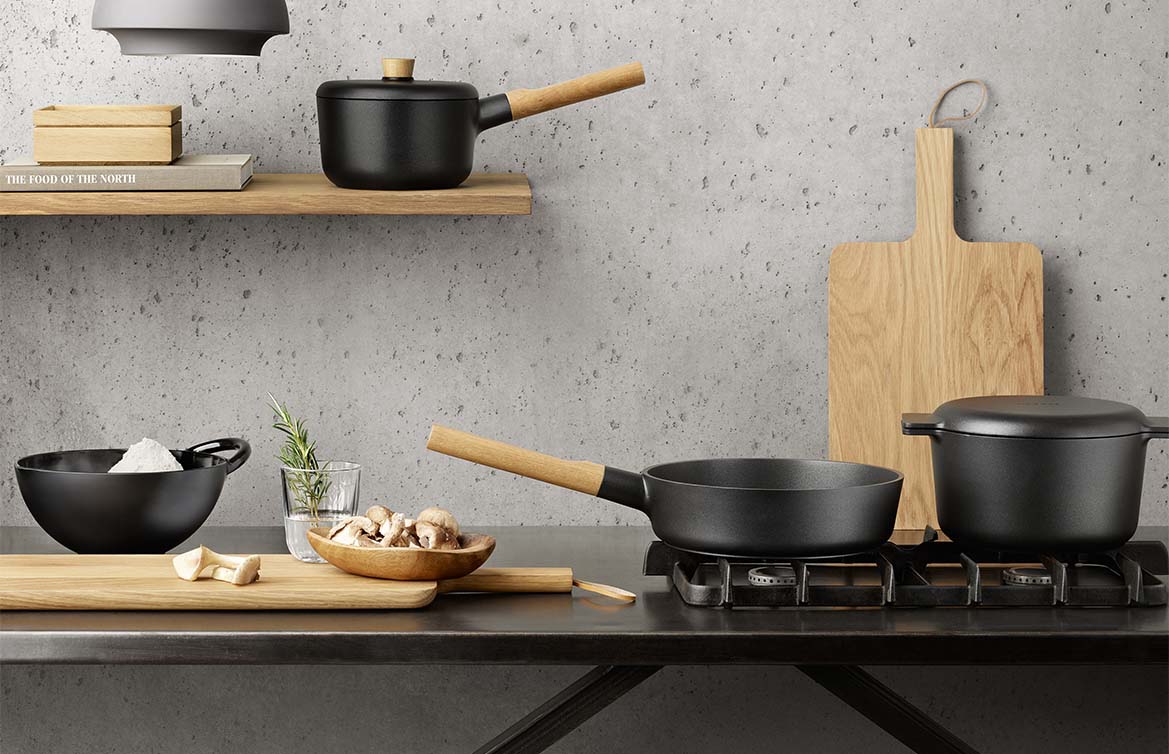
The wooden handle on the Nordic Kitchen pan collection offers a different advantage. While more heat-sensitive, it provides a firm and comfortable grip, adding a touch of Scandinavian aesthetics to the cooking experience.
AUTHOR: Lina Paulauskaitė
Related products
1–2 w.d.

1–2 w.d.

1–2 w.d.

1–2 w.d.

1–2 w.d.

1–2 w.d.

1–2 w.d.